Blog >> Article Details

01 April, 2026
Sorting and Packing Agricultural Crops: Key Steps to Improve Quality and Reduce Waste


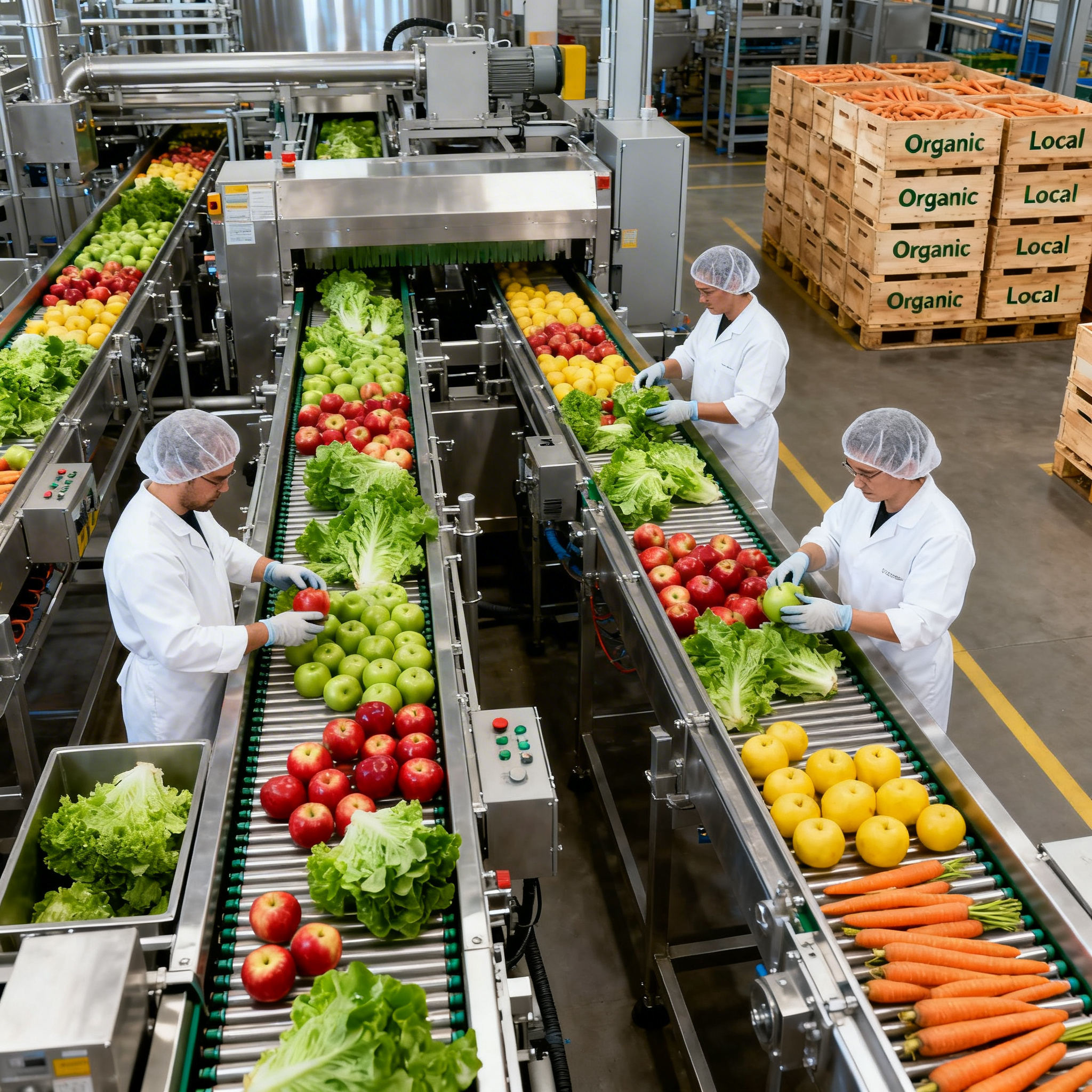
The process of sorting and packing agricultural crops is one of the most important stages before products are introduced to local markets or prepared for export. After harvesting, product quality does not depend only on cultivation, but also on how the crop is handled, sorted, prepared, and packed in a way that preserves its condition and increases its market acceptance.
With growing competition and rising quality standards, sorting and packing systems for agricultural crops have become essential for improving operational efficiency, reducing waste, and accelerating product preparation, especially for sensitive products such as fruits and vegetables.
What Is Meant by Sorting and Packing Agricultural Crops?
The process of sorting and packing agricultural crops refers to a series of stages in which the crop is received after harvesting, then classified according to size, weight, quality, or ripeness, before being packed in a suitable way for storage, transportation, sale, or export.
This process aims to:
- Improve final product quality
- Standardize the appearance of packages
- Reduce damage during handling
- Prepare the crop professionally for the market
- Increase the commercial value of the product
Why Is the Sorting and Packing Stage Important?
This stage represents a critical link between harvesting and marketing. The more accurate and organized the sorting and packing process is, the more it directly reflects on product quality and speed of distribution.
Improving Final Quality
When the crop is sorted correctly, it becomes easier to separate damaged or substandard products, which improves the quality of the final shipment and increases customer confidence.
Reducing Waste and Damage
Random handling of agricultural products often leads to bruising, spoilage, or product loss, especially with sensitive produce. Using suitable sorting and packing systems helps reduce these losses significantly.
Facilitating Storage and Transportation
Good packing does not only improve appearance, but also makes stacking, storage, and transportation easier, while helping preserve the product for a longer period throughout the supply chain.
Supporting Marketing and Export Opportunities
Modern markets, especially export markets, do not rely only on the quality of the agricultural product itself. They also care about the level of preparation, packaging, and grading. Therefore, sorting and packing crops professionally increases their chances of reaching larger markets.
Main Stages of Sorting and Packing Agricultural Crops
The preparation of agricultural crops goes through several connected stages, and these stages should be designed according to the product type and operational requirements.
1. Receiving the Crop
The process begins with receiving the agricultural products from farms or collection points, while ensuring quick transportation and minimizing waiting time so the product quality is not affected.
2. Initial Cleaning
In some cases, the crop is cleaned from dust, impurities, or excess leaves before entering the sorting stage, especially when the product requires careful preparation before packing.
3. Sorting and Grading
This is one of the most important stages of the process, where products are classified according to:
- Size
- Weight
- Color
- Quality grade
- Ripeness level
- External appearance and condition
Accurate sorting helps standardize packages and improve the final appearance of the product.
4. Internal Transfer and Handling Within the Line
Operational efficiency depends greatly on how the product moves between different stages. This is where conveyors and handling systems play a major role in moving agricultural crops smoothly while reducing friction and damage.
5. Packing and Final Preparation
After sorting, products are packed in suitable packages according to the nature of the product and the target market, whether for local sale, distribution, or export.
How Do Sorting and Packing Lines Improve Operational Efficiency?
Having an organized line for sorting and packing agricultural crops provides several important operational benefits, including:
Increased Processing Speed
Instead of relying entirely on manual work, sorting and packing lines help accelerate preparation stages, especially with large quantities and peak production seasons.
Improved Grading Accuracy
The more organized the sorting mechanism is, the more accurate the results become, reducing errors in classification or mixing different quality grades.
Reduced Dependence on Random Handling
Suitable transfer systems reduce congestion and help move products between stages in a safer and smoother way.
Better Use of Available Space
Well-designed lines help organize the operational space inside the sorting or packing station and make the movement of workers and equipment easier.
What Factors Should Be Considered When Designing a Sorting and Packing Line for Agricultural Crops?
Choosing or designing a suitable line depends not only on the project size, but also on several important operational factors.
Type of Agricultural Crop
There is a major difference between handling soft fruits, vegetables, or crops that can tolerate movement and pressure. Therefore, the sorting and handling system must be suitable for the nature of the product.
Daily Production Volume
The number of tons or packages that need to be processed daily affects the line speed, the number of workstations, and the type of required equipment.
Required Quality Level
If the goal is export preparation, sorting and packing standards are usually more precise than those required for local markets.
Available Space
The line design must take into account the site area, movement paths, and loading and unloading points in order to achieve the best use of space.
Ease of Cleaning and Maintenance
In lines that handle agricultural products, ease of cleaning and maintenance is an important factor in maintaining operational continuity and product quality.
When Do You Need to Upgrade the Sorting and Packing System?
There may be clear signs that the current operating method is no longer suitable, such as:
- High waste rates
- Slow preparation processes
- Inconsistent package quality
- Increased product damage during internal transfer
- Difficulty handling large volumes during peak seasons
- Excessive reliance on manual handling
In such cases, upgrading the sorting and packing line becomes an important step toward improving performance and reducing costs.
Conclusion
Sorting and packing agricultural crops is a critical stage in preserving product quality, increasing its market value, and improving its readiness for sale, distribution, or export. The more this process is based on an organized and well-planned system, the more it helps reduce waste, accelerate operations, and improve the final appearance of the product.
Therefore, investing in a suitable sorting and packing line does not only reflect on the appearance of the product, but also on the efficiency of the entire operation and the project’s ability to compete in the market.
FAQ
What is the importance of sorting and packing agricultural crops?
This process helps improve product quality, reduce waste, facilitate storage and transportation, and increase the crop’s readiness for sale or export.
Does the sorting and packing method differ depending on the crop type?
Yes. Each crop has its own characteristics in terms of durability, size, and sensitivity, so the system must be designed accordingly.
Can waste be reduced through sorting and packing lines?
Absolutely. Organized systems reduce random friction and damage, and help move the product more safely.
Is sorting and packing agricultural crops important for export?
Yes. Export markets depend heavily on sorting quality, package consistency, and the overall level of final preparation.


