Blog >> Article Details

01 April, 2026
PVC and Rubber Belts: The Difference Between Them and How to Choose the Right One for Your Production Line


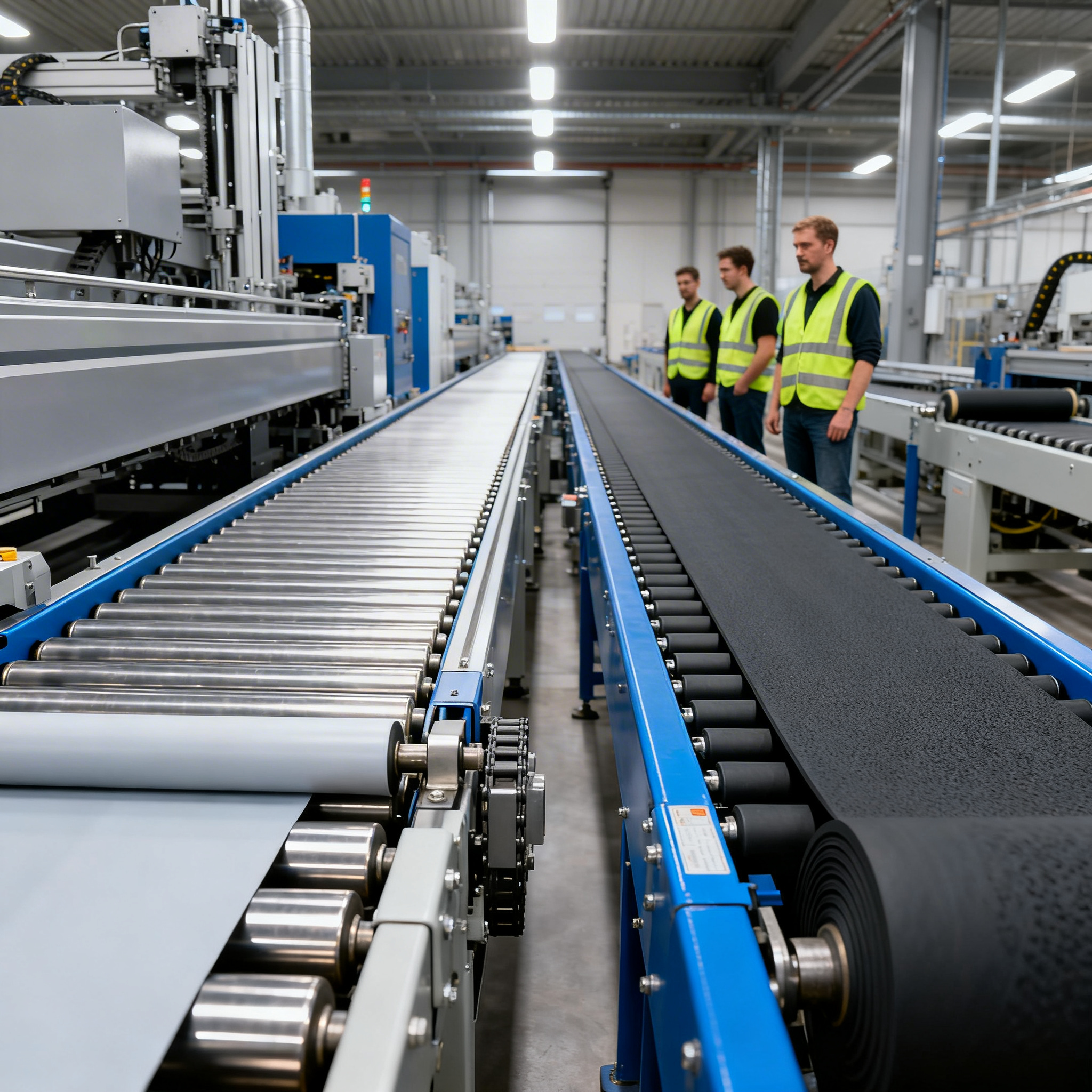
PVC and rubber belts are among the most commonly used conveyor belt types in factories, production lines, and material handling systems. They play a key role in moving products and raw materials efficiently and consistently between different operational stages. Choosing the right type of belt depends on several important factors, including the nature of the product, the operating environment, the required durability, and the line speed.
Although both types serve the purpose of conveying and handling materials, there are clear differences between PVC belts and rubber belts in terms of material composition, application, wear resistance, flexibility, and the industries each type is best suited for. Understanding these differences helps improve performance, reduce breakdowns, and ensure the most suitable solution for each industrial application.
What Are PVC Belts?
PVC belts are conveyor belts made from polyvinyl chloride material. They are widely used in many industrial applications that require a smooth surface, consistent movement, and ease of cleaning and maintenance.
These belts are generally characterized by being:
- Relatively lightweight
- Flexible and easy to move
- Suitable for a wide range of industrial applications
- Available in different thicknesses and surface finishes
- Well suited for environments that require cleanliness and organized operation
What Are Rubber Belts?
Rubber belts are conveyor belts made from natural or synthetic rubber. They are commonly used in applications that require higher durability, greater resistance to friction, and better performance under harsh operating conditions or with heavy loads.
These belts are often chosen for applications that require:
- High load-bearing capacity
- Strong resistance to wear and friction
- Reliable performance in demanding industrial environments
- Handling of raw materials or heavy products
- Continuous operation under tough working conditions
The Difference Between PVC and Rubber Belts
Choosing the right type is not only about cost or appearance, but about the actual operating requirements inside the factory. Below are the key differences between the two types:
1. Material and Surface Characteristics
PVC Belts
PVC belts usually have a smoother and more uniform surface, making them suitable for moving light to medium-weight products and packages, especially in applications that require precision and easy cleaning.
Rubber Belts
Rubber belts offer a tougher and more durable surface, making them better suited for harsh environments, heavier materials, or applications with higher friction.
2. Durability and Heavy-Duty Performance
PVC Belts
PVC belts are ideal for operations that require stable and organized performance. However, they are generally more suitable for light to medium-duty applications compared to rubber belts.
Rubber Belts
Rubber belts perform better in heavy-duty applications and can withstand harsh operating conditions more effectively, especially in factories dealing with raw materials, heavy products, or continuous friction.
3. Flexibility and Smooth Movement
PVC Belts
PVC belts provide good flexibility and smooth operation, making them suitable for lines that require steady movement and accurate product transfer.
Rubber Belts
Rubber belts may be thicker or stronger depending on the application. They are excellent in terms of durability, but their selection should always be based on the actual operational requirement.
4. Operating Environment
PVC Belts
PVC belts are widely used in applications that require cleanliness and organized handling, such as some food industries, packaging lines, and light sorting systems.
Rubber Belts
Rubber belts are more suitable for demanding industrial environments where belts are exposed to continuous friction, heavy loads, or tougher working conditions.
When Should You Choose PVC Belts?
Choosing PVC belts is suitable when you need:
- To move light or medium-weight products
- A smooth and consistent belt surface
- Easy cleaning and maintenance
- Quiet and efficient operation
- Use in packaging, sorting, or precise handling lines
They are also a practical choice when the focus is on organization, cleanliness, and easy maintenance within the operating environment.
When Should You Choose Rubber Belts?
Choosing rubber belts is the better option when you need:
- To move raw materials or heavy products
- Higher durability and strength
- Better resistance to friction and wear
- Performance in harsh industrial environments
- A strong belt for continuous heavy-duty operation
For this reason, rubber belts are widely used in applications that require greater toughness and reliable performance under pressure.
How to Choose the Right Belt for Your Production Line
Before selecting between PVC and rubber belts, it is important to assess your operational needs carefully. The main factors to consider include:
Type of Product Being Conveyed
Are you transporting lightweight packages, raw materials, or heavy products?
The answer to this question plays a major role in determining the most suitable belt type.
Load Weight
The heavier the materials or products, the greater the need for a belt that can handle pressure and friction over long operating periods.
Working Environment
If the working environment requires cleanliness and easy washdown, PVC may be the better choice.
If the environment is harsh or involves continuous friction, rubber may be more appropriate.
Production Line Speed
Some lines require highly consistent motion and accurate product handling. In such cases, the belt should be selected based on the nature of the operation, not only the material type.
Maintenance and Service Life
Choosing the right belt from the beginning helps reduce breakdowns, improve operational efficiency, and extend the overall service life of the system.
The Importance of Choosing the Right Belt in Factories
Using the correct belt type affects more than just the conveying process. It directly impacts:
- Operational efficiency
- Production line stability
- Reduced downtime
- Lower maintenance costs
- Better product protection during transport
- Improved use of time and factory space
That is why selecting the right belt is an essential step in building an effective conveyor or production line system.
Are There Customized Solutions Based on Industry Type?
Yes. Belt selection varies from one industry to another.
Some industries need belts that are easy to clean, others require belts that can handle weight and friction, and some need custom designs depending on product shape, line speed, or operating conditions.
That is why the best solution is always to select the belt based on:
- Industry type
- Product nature
- Operating environment
- Production volume
- Durability and maintenance requirements
Conclusion
PVC and rubber belts are essential components in conveyor and material handling systems within factories and production lines. Each type has features and applications that make it more suitable for certain uses than others. PVC belts are ideal for applications that require cleanliness, smooth movement, and precision, while rubber belts provide greater durability and better performance in demanding industrial environments.
Therefore, choosing the right type should be based on a careful study of the operating process, product type, load requirements, and working conditions in order to achieve the best possible performance with minimal breakdowns and costs.
FAQ
What is the difference between PVC and rubber belts?
PVC belts are generally suitable for light to medium-duty applications and are easy to clean, while rubber belts are better for heavy loads and harsh industrial environments.
Which is better for production lines?
Neither is universally better. The right choice depends on the product type, operating environment, and required durability.
When should I use PVC belts?
PVC belts are typically used in applications that require a smooth surface, cleanliness, and easy operation and maintenance.
When should I use rubber belts?
Rubber belts are used when higher durability, stronger wear resistance, and reliable operation in demanding conditions are required.


